Jainism in Pakistan: A Forgotten Legacy, A Living Emotion
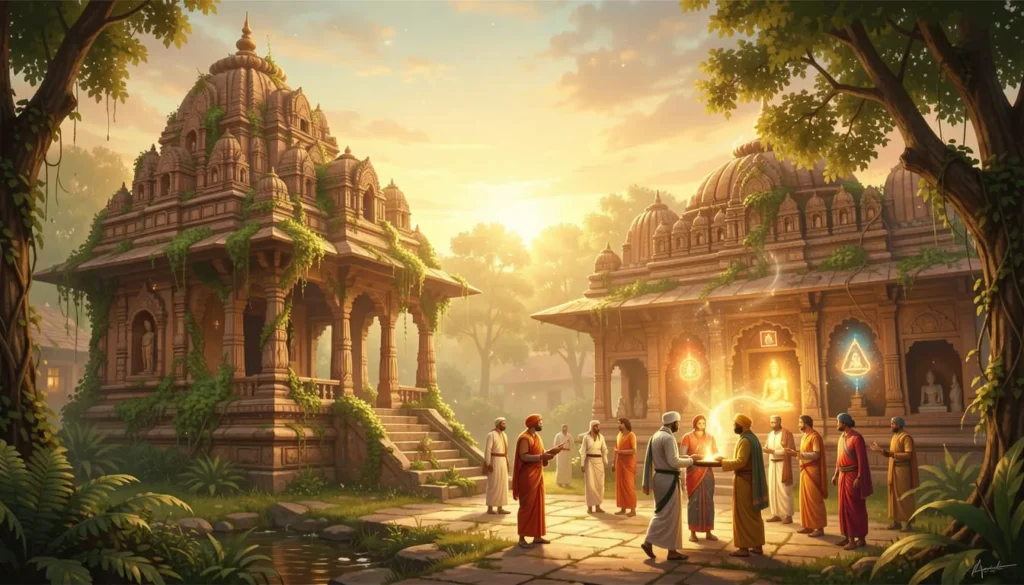
Jainism is not just a religion — it is a feeling, a way of living, a whisper of ahimsa that has travelled across centuries. For millions of Jains today, the idea of Pakistan may feel distant, but the soil of that land still carries the footsteps of Jain monks, the echoes of ancient mantras, and the silent ruins of temples that once glowed with devotion.
This is the story of Jainism in Pakistan — a story of rise, glory, decline, migration, and memory.
A story that deserves to be told with respect, emotion, and truth.
🌿 Introduction: When Ahimsa Walked the Land of Pakistan
Long before borders were drawn, before the word “Pakistan” existed, the region was home to thriving Jain communities. From the bustling trade routes of Punjab to the serene hills of Tharparkar, Jain monks, merchants, and devotees shaped the cultural and economic landscape of the region.
Your document beautifully states:
“Jainism in Pakistan has an extensive heritage and history… several ancient Jain shrines are scattered across the country.”
Yet today, only ruins remain — silent witnesses to a civilization that once lived by the principles of non‑violence, truth, and non‑attachment.
This blog is a tribute to that forgotten world.
🌼 1. The Ancient Roots: When Tirthankaras Touched This Land
Jainism is among the oldest spiritual traditions of the Indian subcontinent. According to Jain lore, Mahavira himself travelled through Punjab and Sindh, blessing the land with his presence.
Your document notes:
“Archaeological finds at Sirkap trace a Jain presence to the 1st century BCE.”
📍 Taxila — The Heart of Jain Civilization
Taxila (Takshashila) was once a major Jain centre. Ancient texts describe:
- Rishabhanatha visiting Takshashila
- Bahubali consecrating his footprints
- Hundreds of Jain temples flourishing here
- Jain monks wandering freely across the region
Excavations at Sirkap reveal Jain temples, stupas, and padukas, proving that Jainism was deeply rooted in this land.
📍 Tharparkar — The Desert of Devotion
Tharparkar in Sindh became a major Jain settlement from the 8th century onward.
Temples, trade routes, and merchant communities made it a vibrant centre of Jain life.
Even today, the Nagarparkar temples stand as breathtaking reminders of Jain architecture.
🌼 2. The Medieval Era: Monks, Merchants & Missionaries
During the Sultanate and Mughal periods, Jainism continued to thrive, especially in Sindh.
Your document highlights:
“Jainism was active in Tharparkar from the 8th century to the British period… Jains were active in art, trade, and commerce.”
🕉️ The Kharataragaccha Tradition
This was the dominant Jain tradition in the region.
Great monks like:
- Jinadattasuri (1075–1154)
- Jinakuśalasūri (1280–1332)
- Jinacandrasūri VI (1541–1613)
travelled across Sindh and Punjab, spreading Jain teachings.
📜 Lahore, Multan, Rawalpindi — Jain Centres of the North
These cities had:
- Jain temples
- Upashrayas
- Community halls
- Merchant guilds
- Libraries with rare manuscripts
The Bhabra community — proud Jain merchants — shaped the economy of Punjab.
🌼 3. The Colonial Era: Growth, Revival & New Challenges
The British period brought railways, roads, and new opportunities.
Jains expanded across Punjab and Sindh, building temples, libraries, and schools.
Your document states:
“The Vallabha Samudāy ensured the survival of Jainism in Punjab during the colonial period.”
🏛️ Temples Flourished
Cities like:
- Lahore
- Sialkot
- Gujranwala
- Multan
- Rawalpindi
saw new Jain temples rise, often funded by wealthy merchant families like the Nahatas of Multan.
📚 Libraries & Manuscripts
Jain scholars preserved priceless manuscripts in:
- Lahore Museum
- Punjab Public Library
- Khilafat Library Rabwah
Many of these works were later moved to India after 1947.
🌼 4. Partition: The Painful Turning Point
1947 changed everything.
Jains, who were less than 1% of the population, suddenly found themselves in the middle of communal violence.
Most fled to India — leaving behind temples, homes, and centuries of heritage.
Your document notes:
“Most Jains fled during partition… their temples and properties remained in Pakistan.”
💔 A Civilization Uprooted
- Entire Bhabra communities left Punjab
- Jain monks broke vows to escape violence
- Temples were abandoned or repurposed
- Manuscripts were carried across the border in haste
- Some Jains converted to Islam to survive
The last Jain family left Karoonjhar in 1971.
🏚️ Aftermath
Many Jain temples became:
- Residences
- Warehouses
- Government buildings
- Mosques
- Schools
Some were vandalized after the Babri Masjid incident in 1992.
🌼 5. The Present: A Fading Yet Sacred Memory
Today, only a handful of Jain families remain in Sindh — mostly in:
- Mithi
- Islamkot
- Nagarparkar
Your document says:
“They are reluctant to reveal their religious affiliation.”
🏛️ Temples That Still Stand
Some Jain temples still survive, though in ruins:
- Nagarparkar temples
- Bodhesar temples
- Viravah temple
- Sirkap ruins
- Multan Jain Mandir (rebuilt after destruction)
These structures are architectural jewels — but they need preservation.
📚 Museums Hold the Last Traces
Jain artefacts can be found in:
- Lahore Museum
- Umerkot Museum
- Bahawalpur Museum
But sadly, they are often labelled as “Hindu”.
🌼 6. The Emotional Side: What This Means for Jains Today
For Jains, Pakistan is not just a neighbouring country —
it is a lost homeland of our ancestors.
It is where:
- Our monks walked barefoot
- Our temples touched the sky
- Our merchants built cities
- Our scriptures were written
- Our communities lived in harmony
The ruins in Pakistan are not just stones —
they are silent prayers frozen in time.
💛 A Sense of Loss
Every Jain who reads about Pakistan feels:
- A tug in the heart
- A sense of longing
- A quiet sadness
- A deep pride
Because our history there is glorious — yet forgotten.
💛 A Sense of Responsibility
We owe it to our ancestors to:
- Preserve their memory
- Document their stories
- Protect surviving temples
- Educate future generations
🌼 7. Why This Story Matters Today
Jainism teaches:
- Ahimsa (non‑violence)
- Aparigraha (non‑attachment)
- Anekantavada (many-sided truth)
These values are universal — and timeless.
In a world divided by borders and identities, the story of Jainism in Pakistan reminds us:
- Cultures travel beyond boundaries
- Faith survives even in silence
- Heritage belongs to humanity
🌼 8. A Call for Preservation
Pakistan’s Jain heritage is a treasure — not just for Jains, but for the world.
What can be done?
- International heritage bodies can help restore temples
- Scholars can document Jain manuscripts
- Museums can correctly label Jain artefacts
- Pakistan can promote Jain sites as cultural tourism
- Jain communities worldwide can support preservation projects
Saving these temples is not just about religion —
it is about saving history.
🌼 Conclusion: The Spirit Still Lives
Jainism may no longer have a thriving community in Pakistan,
but its spirit still lives:
- In the carvings of Nagarparkar
- In the ruins of Sirkap
- In the memories of elders
- In the stories of migration
- In the hearts of Jains everywhere
The land remembers.
The stones remember.
And through blogs like this, we remember.
Jainism in Pakistan is not a lost chapter —
it is a sacred legacy waiting to be honoured.